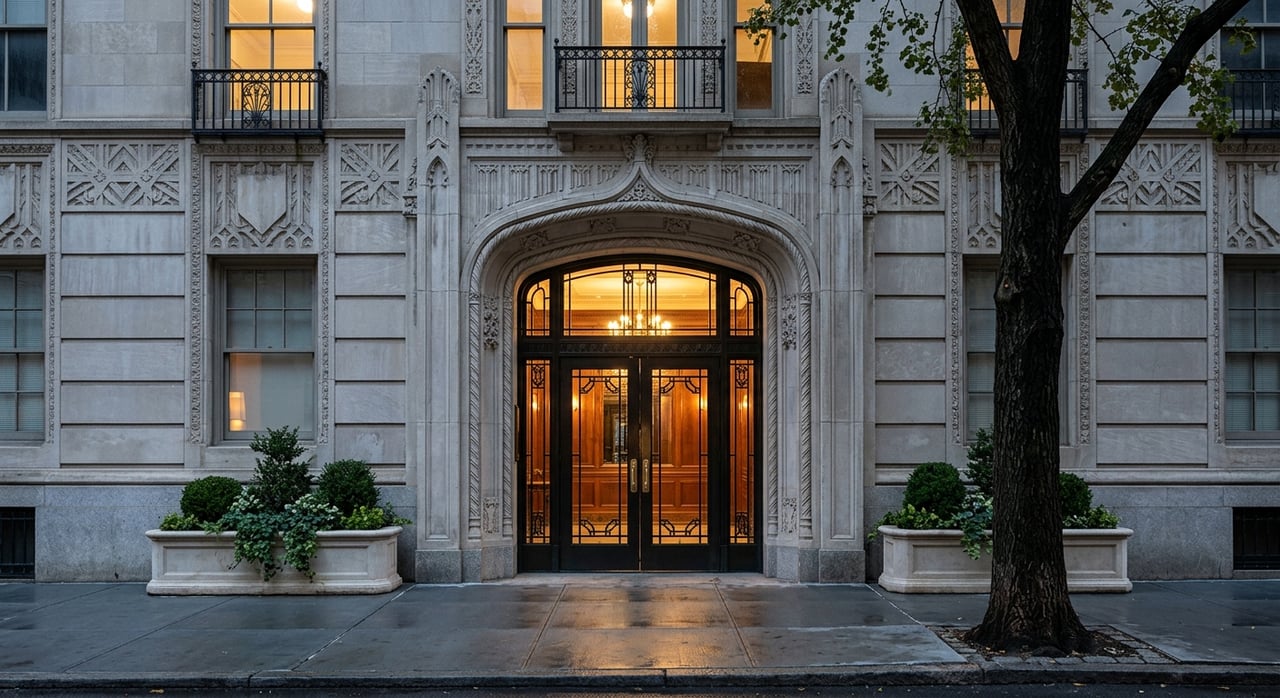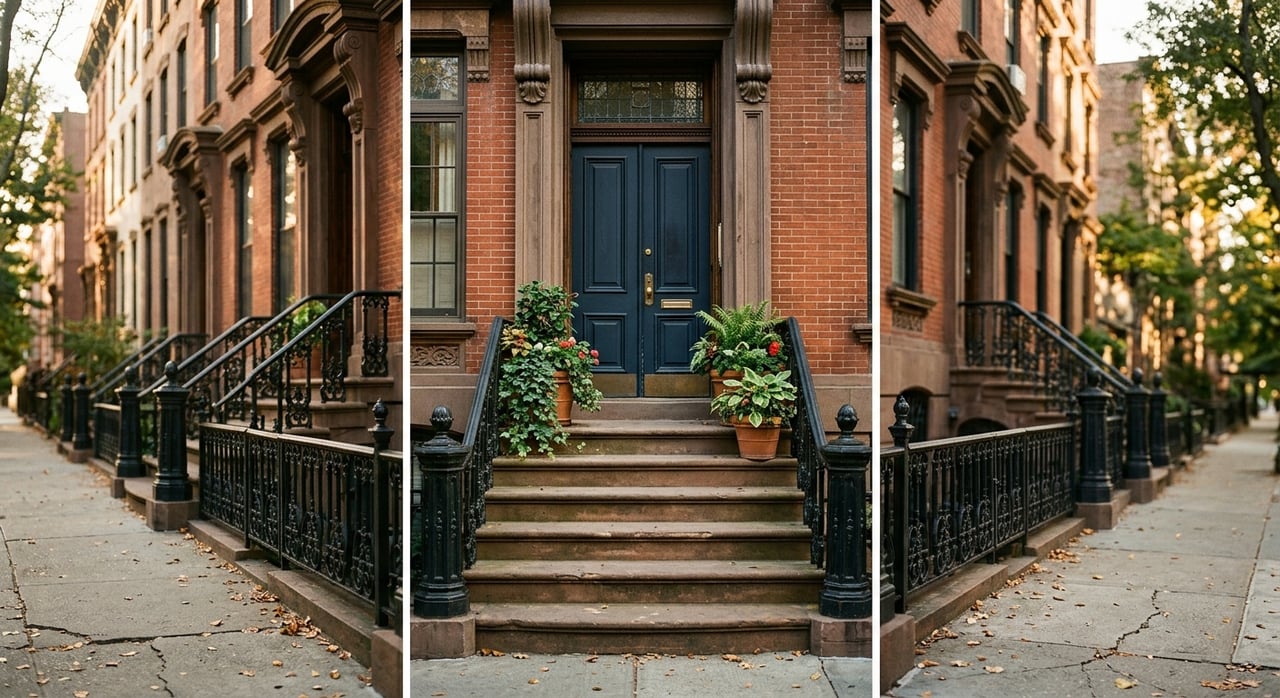
When an Upper East Side co-op board calls its building compliant with Local Law 97, it is describing the 2024–2029 limits, and a buyer closing today holds shares through the tighter period that follows.
That distinction matters more this fall than it did a year ago. In September 2026 the city released its first full picture of enforcement. As Facilities Dive reported on September 28, 2026, about 95% of required properties filed reports, and 95% of those met their emissions limits. A buyer reviewing an Upper East Side co-op this season will probably hear that the building passed. In most cases that's true, and it describes a test that ends in 2029.
A share purchase is a claim on a building's future capital calls. For most buildings, the Local Law 97 costs start with the next compliance period, and the 2024 filing shows almost nothing about how large they will be or who will pay them.
What the first filing shows, and where it stops
The Department of Buildings' year-one compliance report splits Article 320 properties into these groups:
| Article 320 properties, 2024 limits | Count |
|---|---|
| Total covered | 11,036 |
| Filed a report | 10,437 |
| Met the emissions limit | 9,951 |
| Exceeded the limit | 470 |
| Exceeded by more than 50% | 124 |
| Requested penalty mitigation for good-faith efforts | 149 |
| Did not file | 599 |
So far the penalties are small. By the time of the Facilities Dive report, DOB had sent 164 emissions notices of deficiency. About 15 buildings had paid or were paying penalties totaling roughly $270,000, and five had resolved their notices with offsets. That's a light enforcement record, and a seller's broker will say so.
According to the same article, the pass rate was higher than the city's original models predicted. The DOB official interviewed said part of the reason was data refinement, along with differences between how square footage was modeled and how it was measured. She also said the refinement won't help owners going forward: "When we hit 2030, so many more building owners are going to have to do something to come into compliance."
The second limit is the one that bites
The 2024–2029 limits are the first step. Tighter limits apply from 2030 through 2034, and the law's citywide target is a 40% cut in building emissions by 2030 and net zero by 2050. Urban Green Council estimates from 2024 energy performance data that about 9% of properties exceed their 2024 cap, while about 57% emit more than their 2030 cap.
Those figures are citywide, not specific to the Upper East Side. Still, a co-op that clears its 2024 cap by a modest margin could easily land in that 57%. Article 320 charges $268 for each metric ton of CO₂-equivalent above a building's annual limit.
One Upper East Side building shows how that adds up. The Retrofit Playbook for Large Buildings profiles 215 East 68th Street, a 32-story multifamily building of more than one million square feet, built in 1962. It runs natural gas boilers and absorption chillers, so it burns fossil fuel all year. That puts it in penalty range starting in 2030, with business-as-usual penalties of more than $250,000 a year. The owner, Rudin, plans to switch to electric heat recovery chillers. The case study lists $16 million in decarbonization costs against $3 million in incentives. The playbook doesn't describe the building as a co-op, and several steps are listed as planned rather than finished. The math still holds for a postwar Upper East Side building: it can comply today and face a six-figure annual penalty in 2030 because its equipment hasn't changed.
Some buildings have already closed that gap. In July 2024, Habitat Magazine reported that Westminster House, an Upper East Side co-op, had replaced its roof and converted from oil to gas. Its real-time data tool showed emissions about 50% below the 2024 cap and about 30% below the 2030 cap. Those numbers are the building's own tool estimates from 2024, not DOB findings. Even so, two buildings in the same neighborhood that both passed in 2024 can look very different on the 2030 limits.
Fuel sets the slope
Local Law 97 counts emissions by multiplying each fuel a building uses by a fixed coefficient and comparing the total to the building's limit. That makes the boiler room the place to start on the Upper East Side.
Con Edison's steam system serves Manhattan from the southern tip up to 96th Street, which covers the whole Upper East Side. In DOB's coefficient table for 2030–2034, district steam is 0.00004320 tCO₂e per kBtu and natural gas is 0.00005311. So each unit of steam counts about 19% less than the same unit of gas. That helps, but it doesn't exempt a building, and being inside the service area doesn't mean a particular building is connected. The building's records will show whether it is.
Offsets are limited in a similar way. Habitat reported in July 2026 that new renewable energy credits were expected to become available to co-ops and condos, with the first certificates usable toward 2027 compliance. They offset off-site electricity emissions, not emissions from a boiler burning fuel in the basement, and their price and supply were still uncertain. A prewar co-op heated by an on-site gas boiler can't fix that problem with credits.
How the bill reaches a shareholder
Once a board decides to do the work, its choice of financing determines who pays and when. Three recent co-op cases show the options.
| Funding route | Documented case | How shareholders carry it |
|---|---|---|
| Special assessment | 57 W. 93rd St., Upper West Side, window replacement | A per-share charge, with a small discount for paying upfront or the option of monthly installments |
| Wraparound mortgage | Concord co-op, Long Island City, $1.5 million for boiler and façade work | Maintenance went up, with no special assessment |
| C-PACE loan | 304 W. 89th St., Upper West Side, about $1 million for heat pumps | Repaid through the property tax bill and stays with the building if it's sold |
Habitat's August 2025 case study of 57 W. 93rd St., a 42-unit co-op, estimated its penalty at $1,200 for the first period and $22,800 in 2030. The windows cost more than $488,000, and Con Edison incentives covered $242,000 of that. The board said its reserves weren't enough to cover the rest, so it assessed shareholders. In this case, a buyer who closed shortly before the vote would have paid for work that protects against a penalty arriving years later.
At the Concord, according to Habitat's October 2025 report, the board financed upgrades with the wraparound mortgage, which spread the cost into monthly maintenance. The board also expected more Local Law 97 work ahead of 2030.
The third route is new for co-ops. Commercial Observer reported the first C-PACE loan to a New York City multifamily co-op in 2026. The roughly $1 million loan at 304 W. 89th St. paid for a heat pump installation. The lender's April 16, 2026 announcement says the financing moves the building off steam to electric heating with mini-split and domestic hot water heat pumps, and that the work is expected to bring the co-op below the emissions limits Local Law 97 sets through 2050. Even a steam building, with its lower coefficient, chose to electrify. NYC Accelerator describes PACE as long-term financing for up to 100% of eligible upgrade costs. It's repaid through the property tax bill and transfers when the building is sold, and project costs can be financed retroactively for up to three years. A buyer in a PACE-financed building takes on a share of that obligation through carrying costs rather than through a one-time charge.
The abatement still waiting on the mayor
A fourth option could change the math for boards that haven't committed yet. Under the current J-51 R program, as Habitat described it in October 2025, eligible co-ops and condos with an average assessed value of no more than $45,000 per apartment can recover up to 70% of qualifying capital costs over at least 12 years. Habitat's July/August 2025 coverage said Local Law 97 upgrades such as high-performance windows and energy-efficient hot water heaters could be eligible.
On September 24, 2026, the City Council approved Int. 1015-A, which would expand the program. It would cover projects completed between June 30, 2026 and June 30, 2036, raise the co-op and condo ceiling to $60,000 per dwelling unit, and allow up to 100% of certified reasonable costs over 20 years. The annual cap would be 8⅓% of cost and 50% of the building's taxes, and the proposed effective date is January 1, 2027. As of October 12, 2026, the Council's legislative record shows it at the Mayor's desk for signature, with no enactment date. Until it's signed, it remains a proposal. Many full-floor Upper East Side apartments may sit above any per-unit valuation ceiling, so whether a building qualifies is something to confirm, not assume.
What to request before the board interview
DOB says its Covered Buildings List is preliminary and that owners are responsible for confirming their building's status. An energy grade by itself doesn't show compliance, because the law calculates emissions from fuel use. The useful documents are specific to the building:
- The latest emissions report and the compliance pathway on file. Buildings with at least one rent-regulated unit, and no more than 35% of units rent-regulated, are on a 2026 pathway, with a first report due May 1, 2027.
- Any notice of deficiency, mitigation request or penalty payment.
- The building's projected emissions against its 2030 limit, if the board has modeled them.
- Approved retrofit scopes, contractor bids and expected incentives.
- The financing plan: assessment, mortgage, PACE, or abatement application.
- Reserve levels and projected maintenance after the work.
None of this sets a price. We found no 2025–2026 dataset that measures Local Law 97 discounts in Upper East Side co-op sales. These documents show what the building is likely to ask of its shareholders over the next several years.
FAQ
If a building is under its 2024 limit, is it compliant through 2030?
Only for the 2024–2029 period. The 2030 limits are tighter, and Urban Green Council's citywide estimate puts about 57% of properties above them based on 2024 data.
Can a co-op buy offsets instead of retrofitting?
Partly. DOB said affordable housing reinvestment fund offsets are an option for some buildings within 10% of their limit. Renewable energy credits only offset off-site electricity emissions.
Does a PACE loan go away when the building is sold?
No. NYC Accelerator says PACE is repaid through the property tax bill and transfers with the building when it's sold.
Luca Paci Real Estate reviews these documents with clients as part of evaluating a purchase. Request a discreet consultation to go over a specific building's file before you submit a board package.
This article is general information, not legal, tax or financial advice. Consult a qualified professional about your situation.